
An old-time lumberjack rests on a log on a chute, a single-bitted axe in his hand. Chutes differed from flumes, which carried logs on running water in a board trough. Chutes were two logs butted together that horses could pull logs along in skidding them out of the woods. Chutes were greased with a swab on the end of a stick about the size of a broom handle to make the logs slide easier.
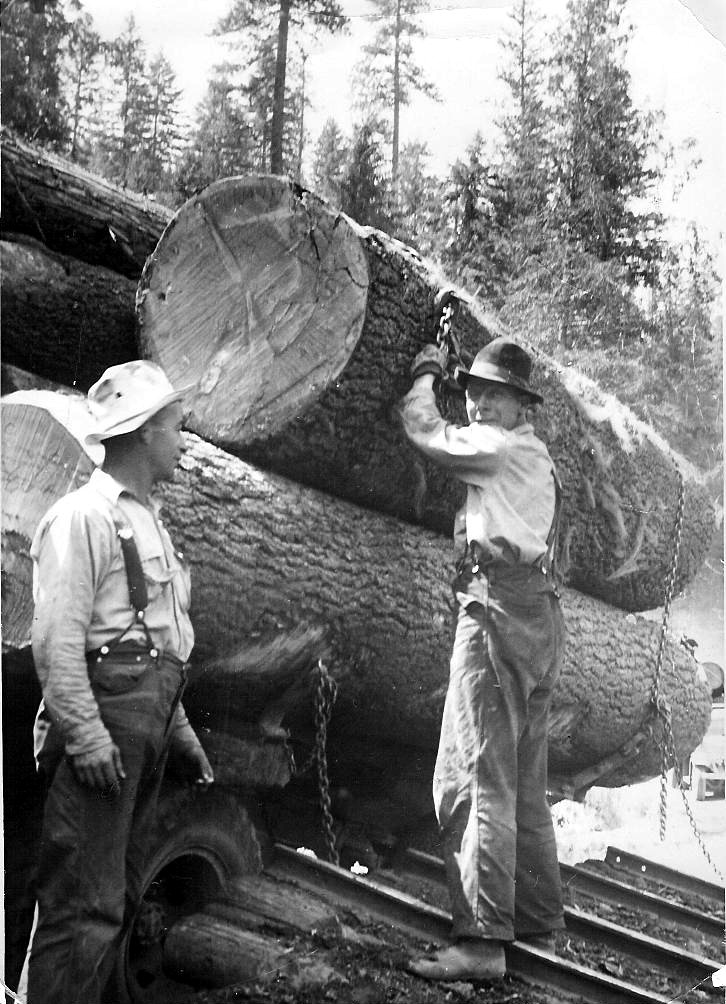
Marion Boyd looks on while a fellow logger, possibly Norm Doolittle, fastens the binders on a truckload of logs.
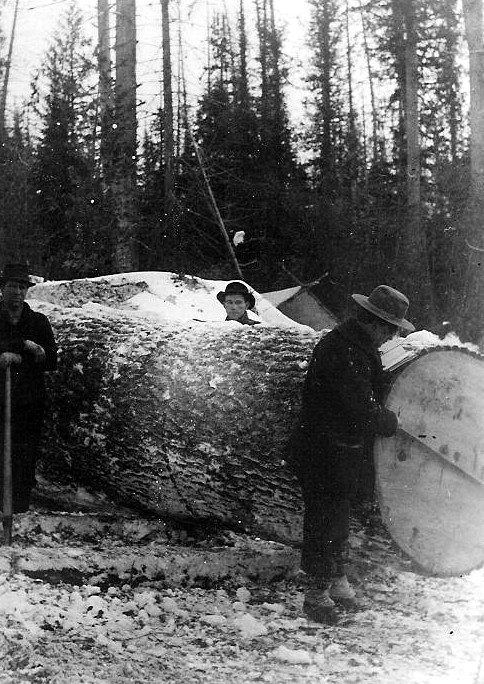
This photo, taken north of Priest River somewhere, shows a scaler measuring a large log to determine how many board feet of lumber it contained.

This photo of a winter logging operation at Humbird’s Camp 19 on the Lower West Branch in 1928-29 shows a load of logs on a logging sleigh pulled by a team of horses. The tracks the sleighs ran in were watered in cold weather to make ice for easier pulling.
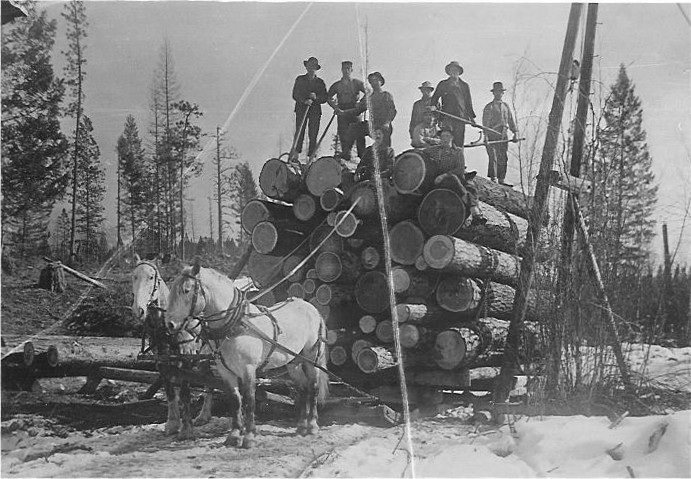
In the old days, most logging was done in the winter time because snow on the ground made for good skidding and hauling. In this picture, logs are being loaded on a sleigh by a crew of loggers assisted by an A-frame jammer.
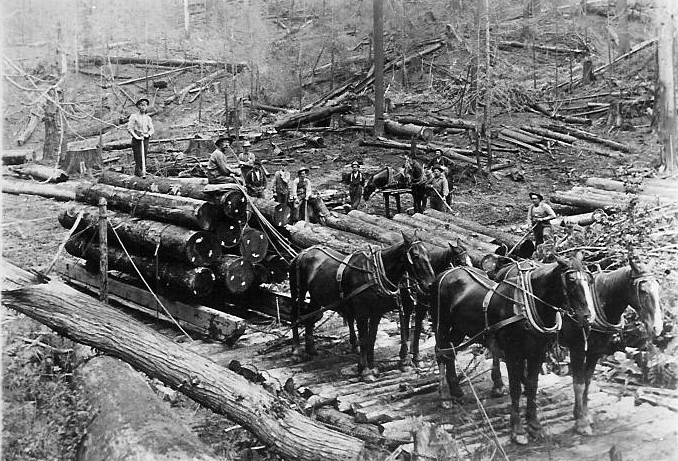
Glen Stewart took this photo of a wooden-runner logging sled on a “corduroy road” in 1913. “Corduroy” was poles or boards lay over boggy ground.
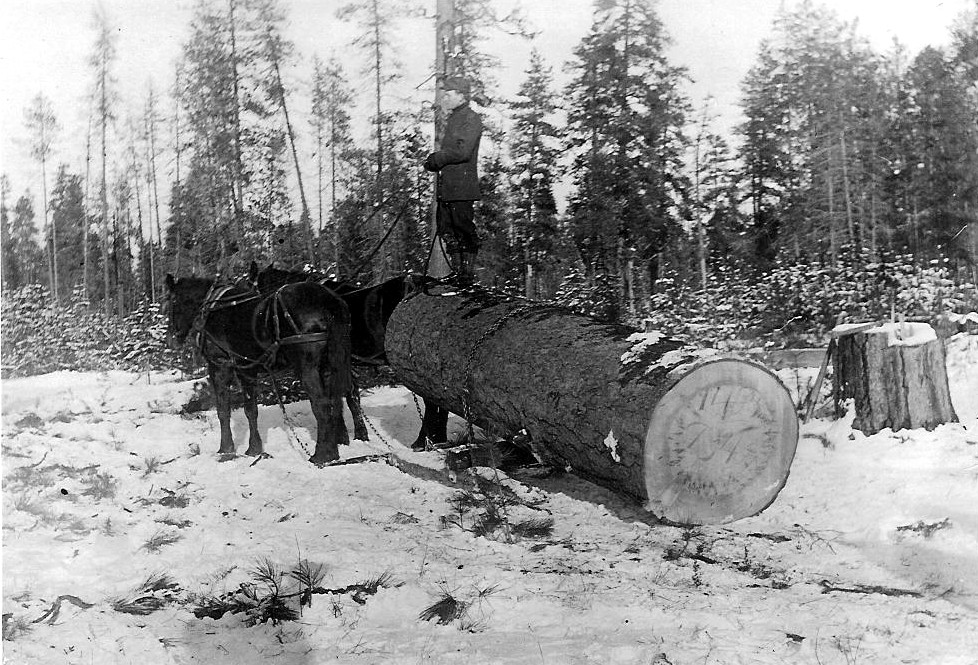
A team of horses is prepared to skid this big log out of the woods.
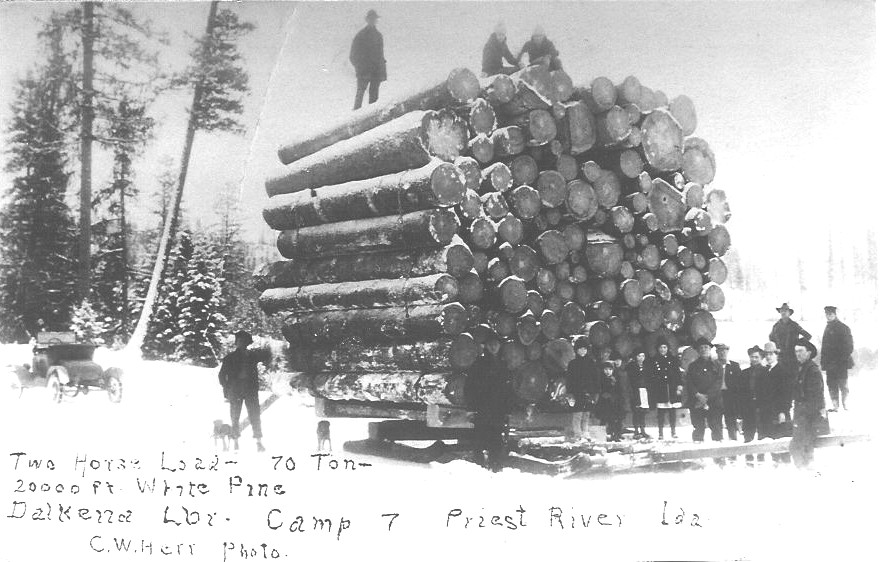
C.W. Herr took this photo inscribed “Two Horse Load, 20,000 ft. White Pine, 70 ton, Dalkena Lbr. Camp 7, Priest River, Idaho” in 1923. Several versions of the picture exist. Those in the photo include: Edith Binkley, Nellie Specht, Evelyn and Clover Ragan, John Specht, Harvey Wright, Stanley Jones, Phil Naccarato, Sid Ragan, Jess Johnson, Hueston Babcock, Ted Golden, Jim Brady, and Jim Wheeler.
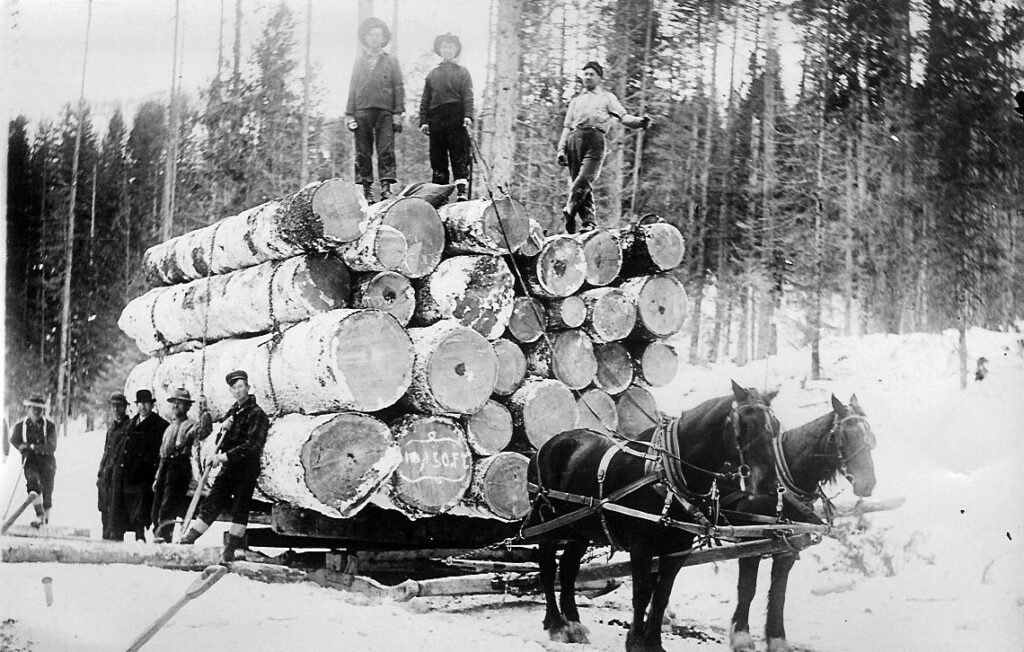
This photo was taken about 1910 somewhere in the Kaniksu.
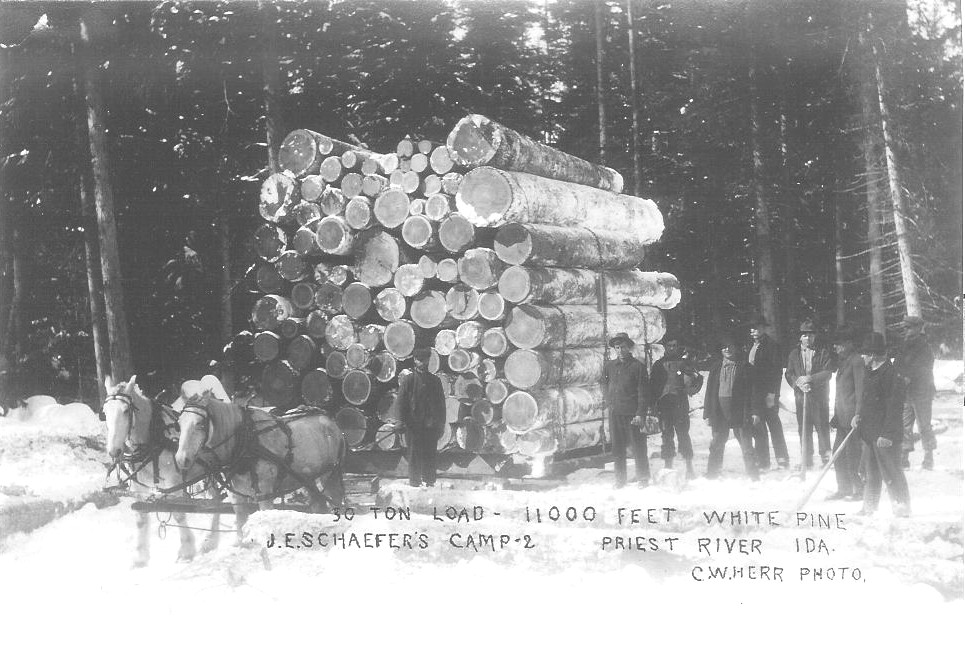
C.W. Herr photographed this 30-ton show load at Schaefer’s Camp 2 sometime in the early years of the 20th century. As the notation on the front of the picture says, the load contained 11,000 feet of white pine.
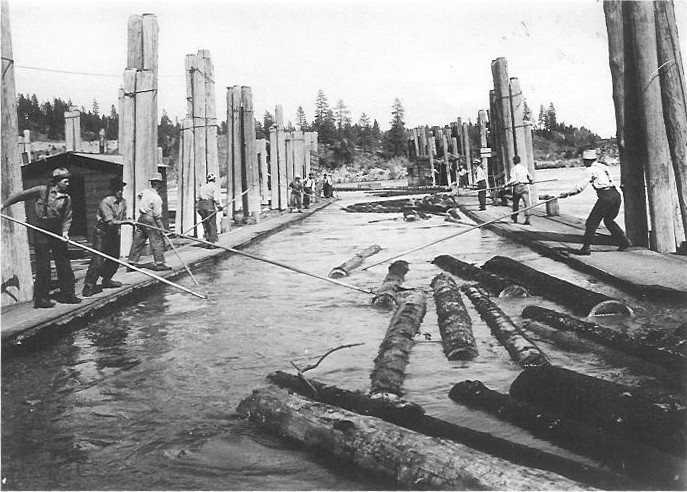
The annual Priest River log drive brought logs from north of town to the Priest Lake area down the river to the sorting gaps in the Pend Oreille River near town. They were sorted there by lumberjacks with pike poles.

These booms of logs in Priest Lake are awaiting spring and the log drive. The photo is believed to have been taken near the Diamond Match headquarters at Cavanaugh Bay.
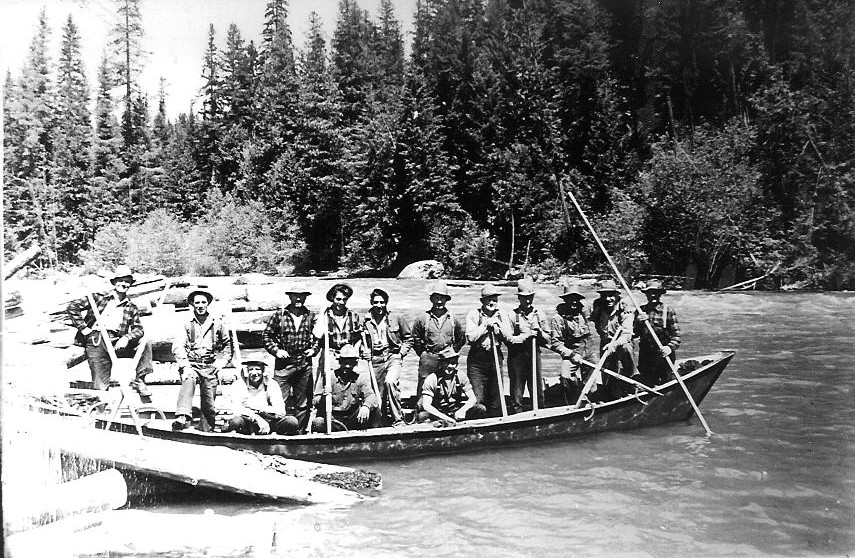
This was the crew of the Diamond Match bateau in the spring of 1947: l-r, standing, Bill Whetsler, Leo Black, Jim Bews, Larry Gardner, Bill Dodge, Dave Bryant, Red Rouse, Jack Webb, Pete Golden, Mike Rose, and Paul LaMotte. Seated in front are: Sievert Flaten, Ernie Ward, and Calvin Hoepfer.

Until the annual log drive on the Priest River ended in 1949, the mouth of the river was jammed bank to bank with logs every spring, all the way from its confluence with the Pend Oreille to the highway bridge over the Priest upstream.
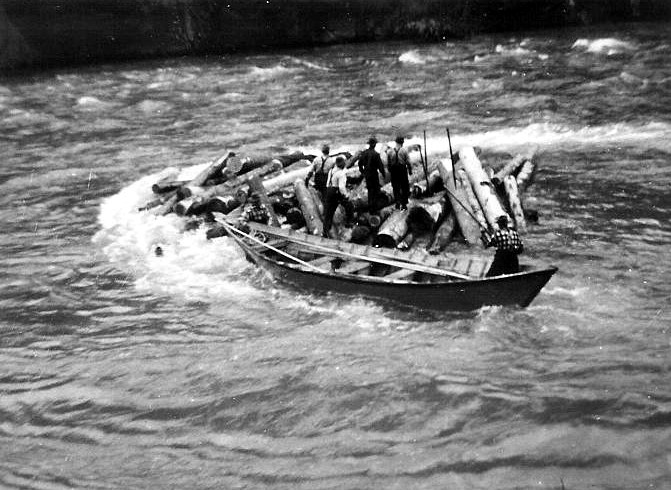
The crew of the Diamond Match bateau attacks a center jam in the Priest River, probably sometime in the 1940s. Jams that formed in the middle of the river were center jams; those that extended into the river from the bank were wing jams.

A lumberjack on a small center jam in Priest River pulls on a line attached to the Diamond Match Co. bateau, as the crew works to break the jam.

This was a Beardmore driving crew working on the West Branch, probably in the early twenties.
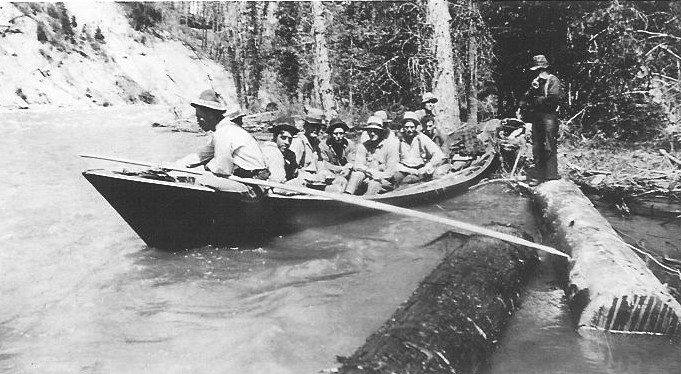
This bateau preceded the Diamond Match bateau used in the 1940s. Wallace Doolittle is the second man from left, facing the camera and wearing a dark hat; Sievert Flaten is no. 5; and Henry Lund stands at the river’s edge.
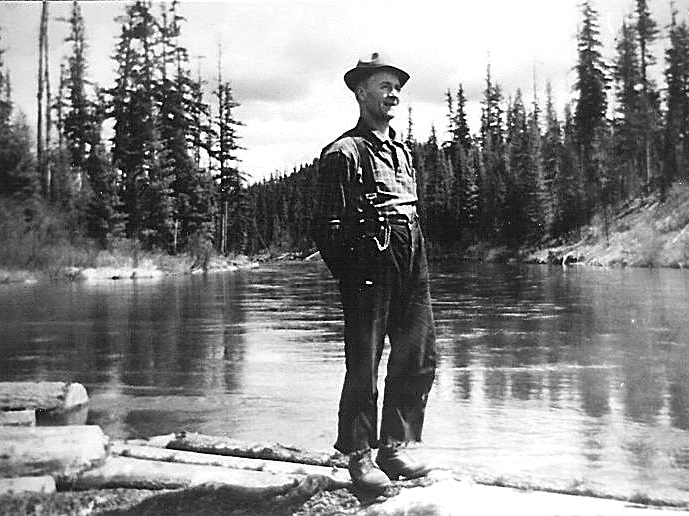
Bill Whetsler was “boss of the drive” on the Priest River for a number of years. It’s easy to see he loved his work.
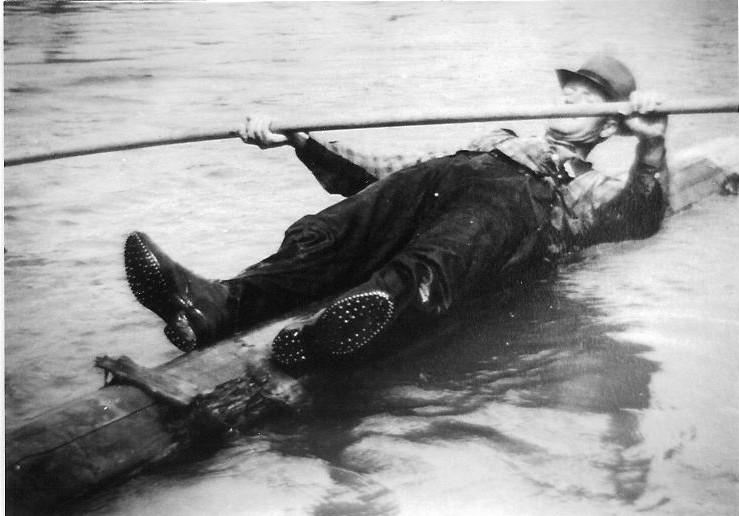
It is said that Bill Whetsler, “boss of the drive,” was a natural-born showoff who could do just about any stunt on a log floating in the river. In this photo, he’s lying on one on his back while balancing himself with a pike pole.

Bill Whetsler, at left, and Chet Bates pose in the bateau about 1940.
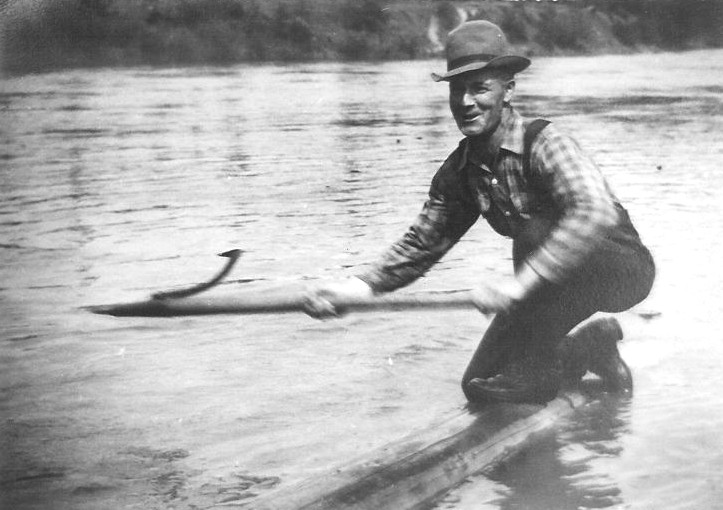
Bill Whetsler holds a peavey in this photo.
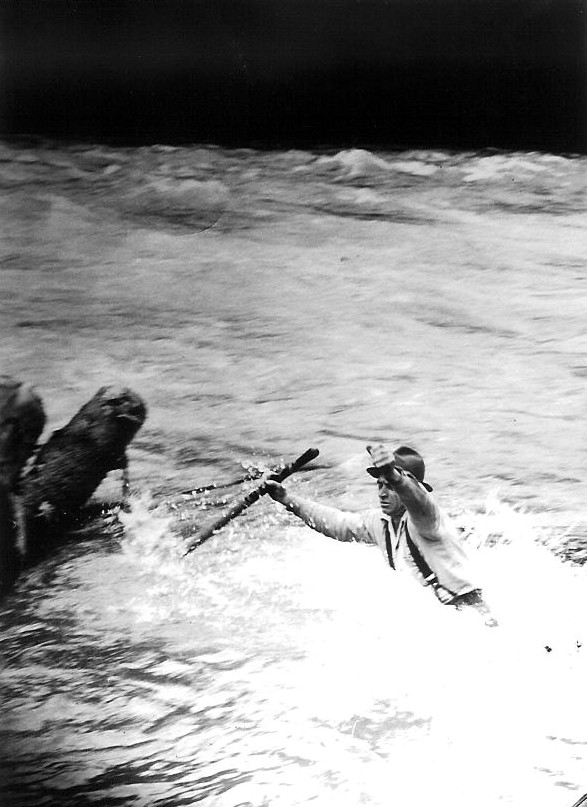
It is said that one of Bill Whetsler’s ironclad rule was that any river pig who got dunked into the river while working the log drive had better come up with his peavey in his hand or he’d be looking for another job come morning. You can see that this fellow has a grip on his.
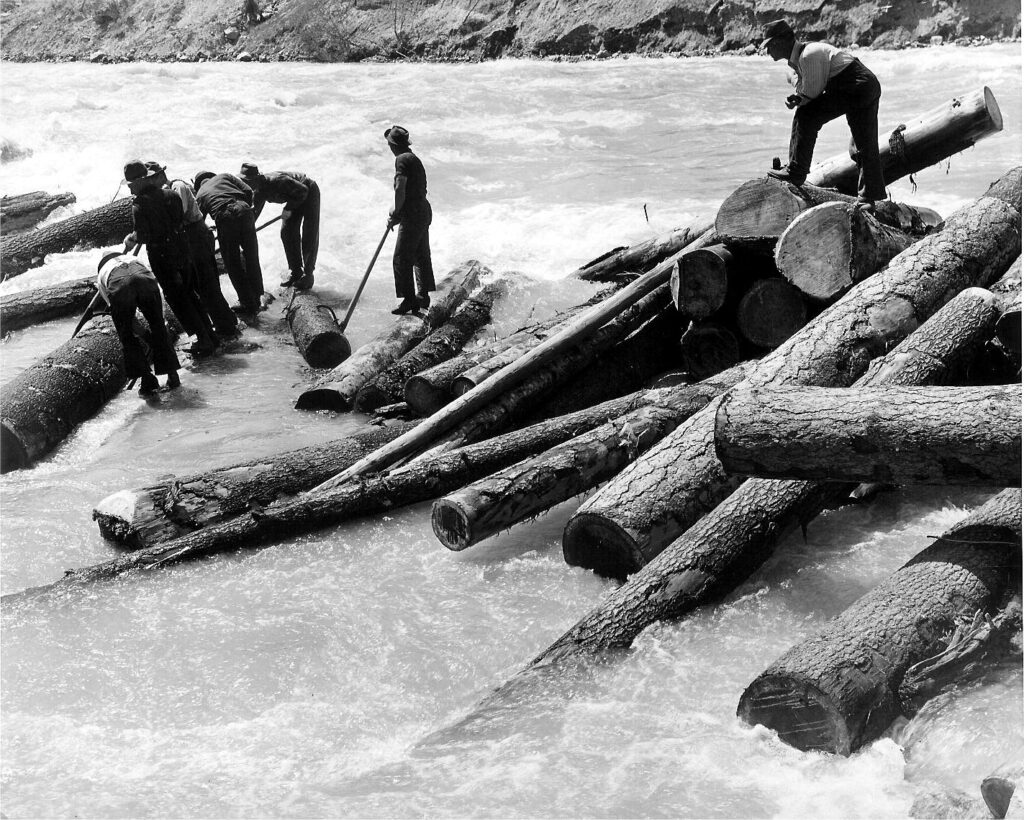
A group of river pigs takes a breather while working a jam at rapids in the river.

Handling the bateau in white water demanded more than a bit of skill, as demonstrated here. Bill Whetsler sits in the front of the boat; the other men’s identifies are not known.
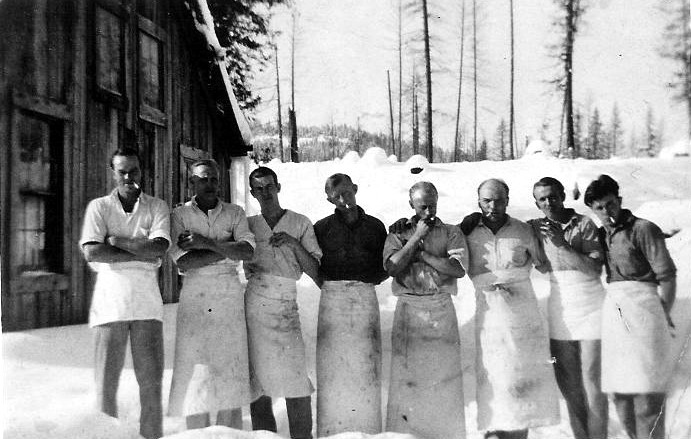
The cookhouse crew at the Humbird Camp 19 on the Lower West Branch posed for this photograph sometime during the winter of 1928-29. From l-r, Slim Foss; Ed Hansen, first cook; two unknowns; Ralph Hansen; a man named Rex, first name unknown; Felix Beckstrom, flunky; James Turpin, flunky. They fed 175 men three meals a day.

Nothing is known about this picture except that it shows an early logging camp somewhere north of Priest River.

This photo shows a Beardmore summer logging camp kitchen in 1913. The food was also good and there was plenty of it in a logging camp because otherwise the lumberjacks wouldn’t stay.

J.E. Schaefer’s Camp 9

This Dalkena Lumber Co. camp, photographed in the 1920s probably, was near Priest River. Pete Peterson is the fellow on the extreme left. The others are unknowns.
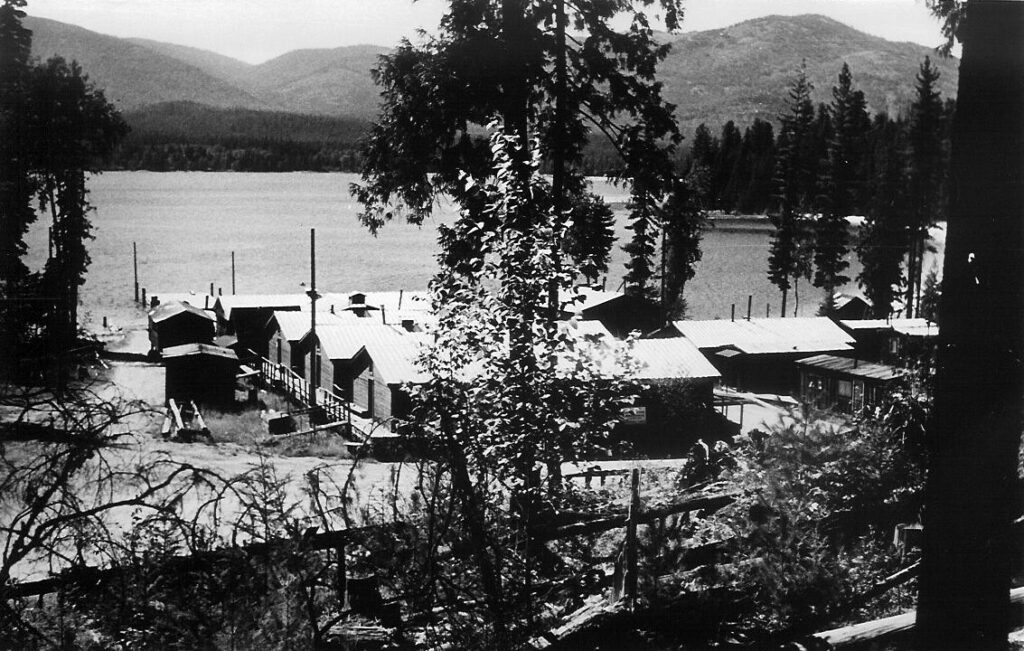
Diamond Match’s “show-me” camp, Camp 9 on Priest Lake, had a beautiful location and was the most “luxurious” of any of the camps in the Priest River-Priest Lake area to boot. The company delighted in hosting corporate bigwigs there.
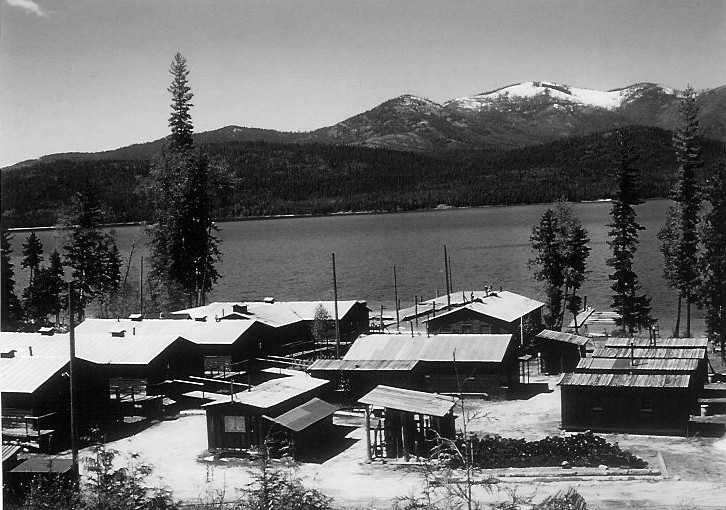
Another, color view of Diamond Match’s Camp Nine at Priest Lake, taken in May 1958.
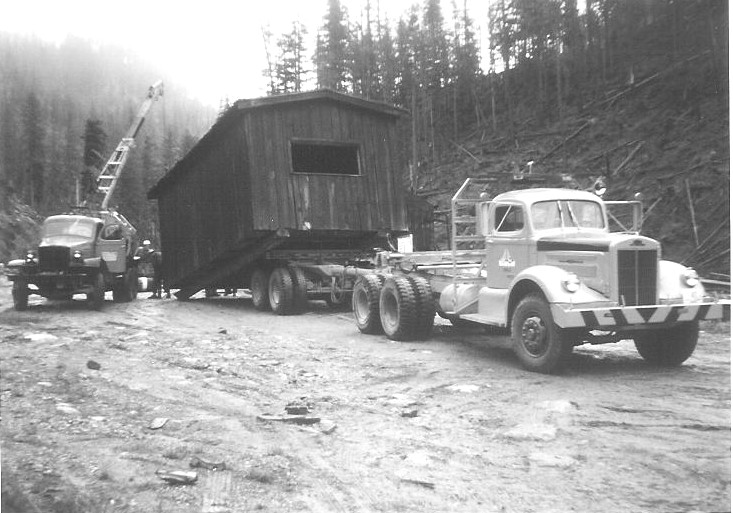
Diamond Match Camp Bunkhouses are being moved in this photo from their East River location. Camp A was in use from 1949 until 1958.
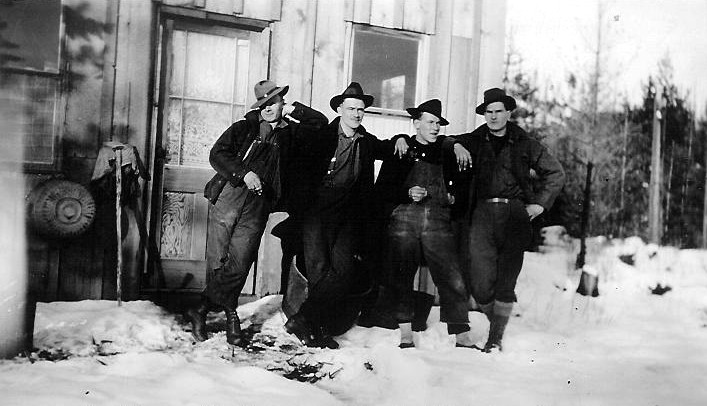
These four happy fellows posed in front of a bunkhouse at Dalkena’s Camp 3 in February 1921.
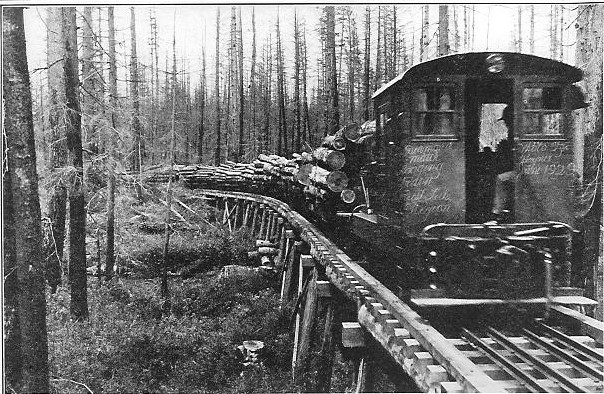
Logging railroads were built in a number of locations in Bonner County as a means of transporting logs out of the woods. This 1921 photo is of the Diamond Match logging train at Kalispell Bay, Priest Lake. According to the donor, Stanley Jones had the job of transporting the locomotive into the Priest Lake area, with the help of Howard Peterson, Otto White, and Shorty Sheridan. They had to reinforce the Saddler Creek bridge to bear the weight, she said.
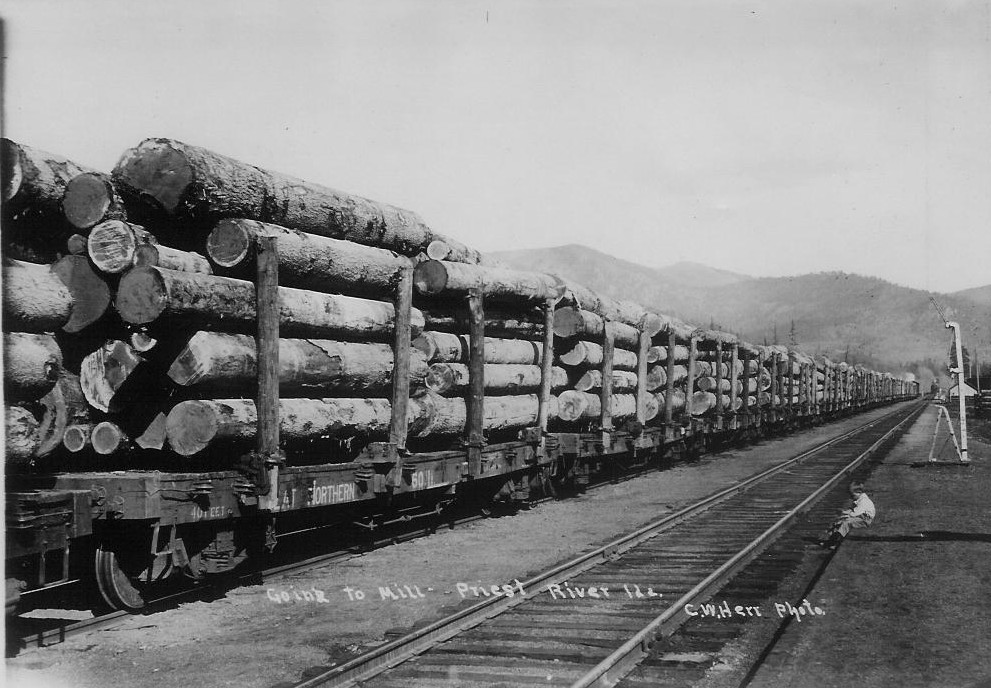
C.W. Herr took this photograph of a whole train of flatcars loaded with logs being shipped to the Beardmore Mill in Priest River.

These logging trucks are waiting for a ferry to carry them across the Pend Oreille River—possibly at Newport (Oldtown).
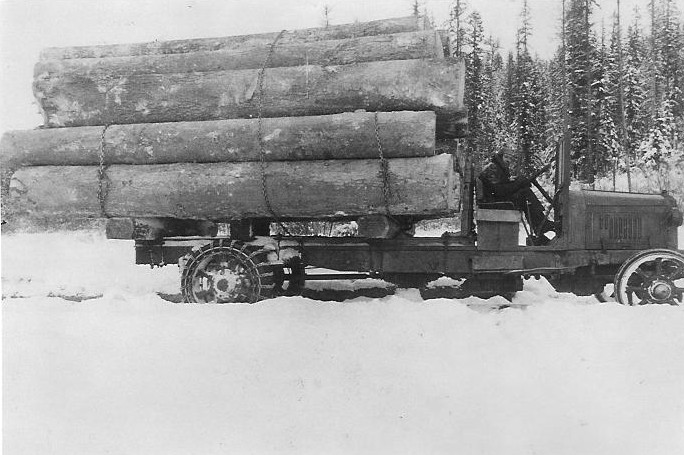
This picture is referred to as “Peterson’s air-conditioned truck,” for obvious reasons. During the winter of 1928-29, Edwin G. Peterson hauled logs for the Humbird Lumber Co. on Gleason Meadow Cutoff Road. in this Federal truck with hard rubber tires.
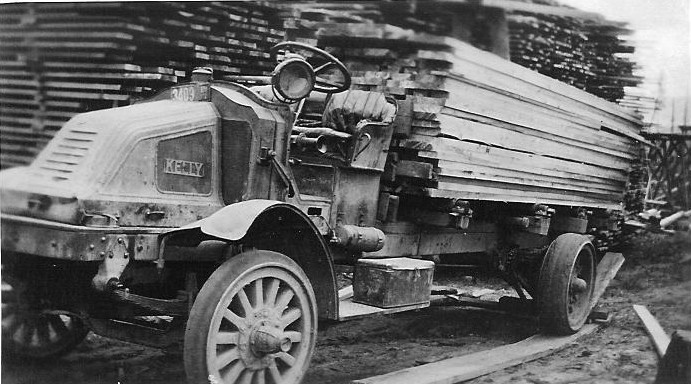
Sometime in the 1920s most likely Priest River’s Howard Peterson drove this Kelly-Springfield lumber truck at Samuels.